


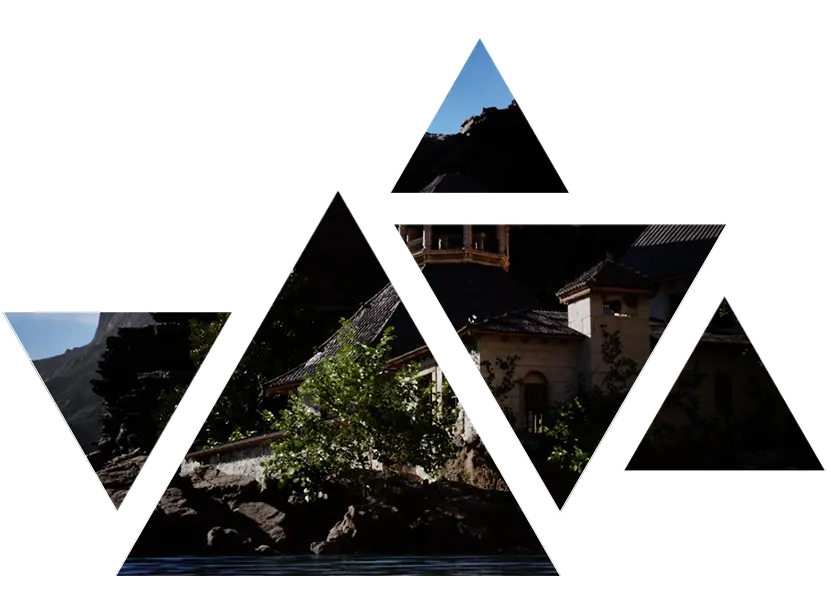
Lakeside Retreat
Overview
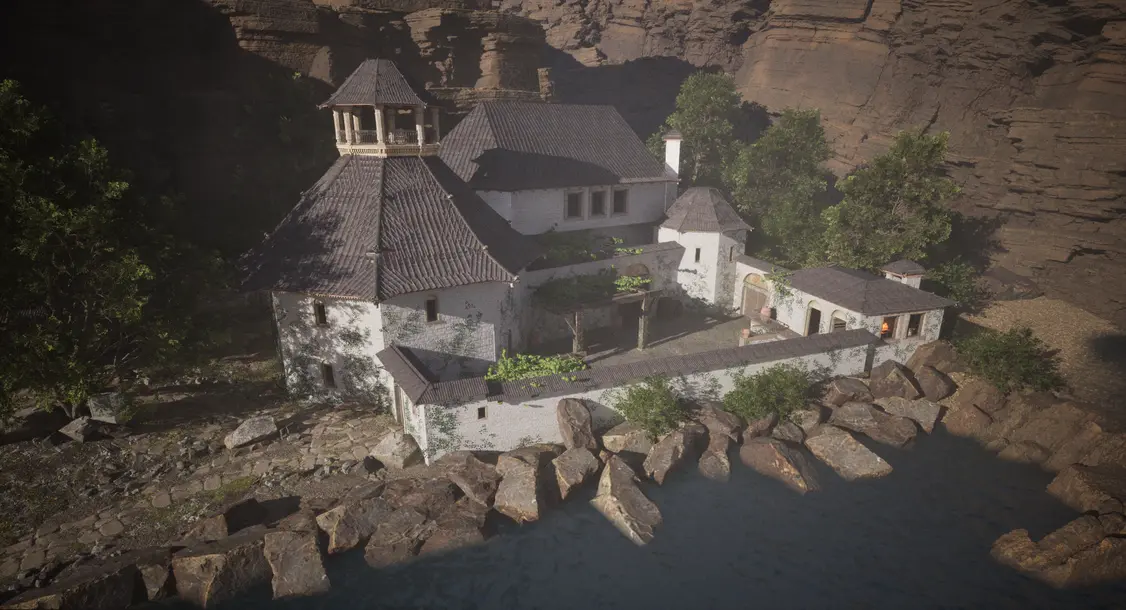
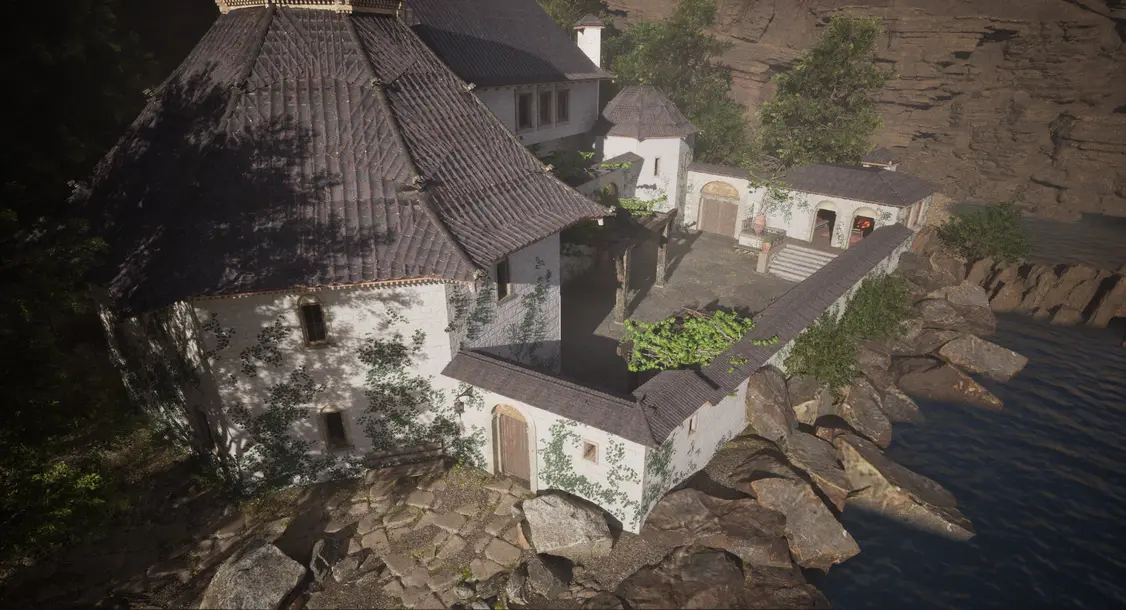
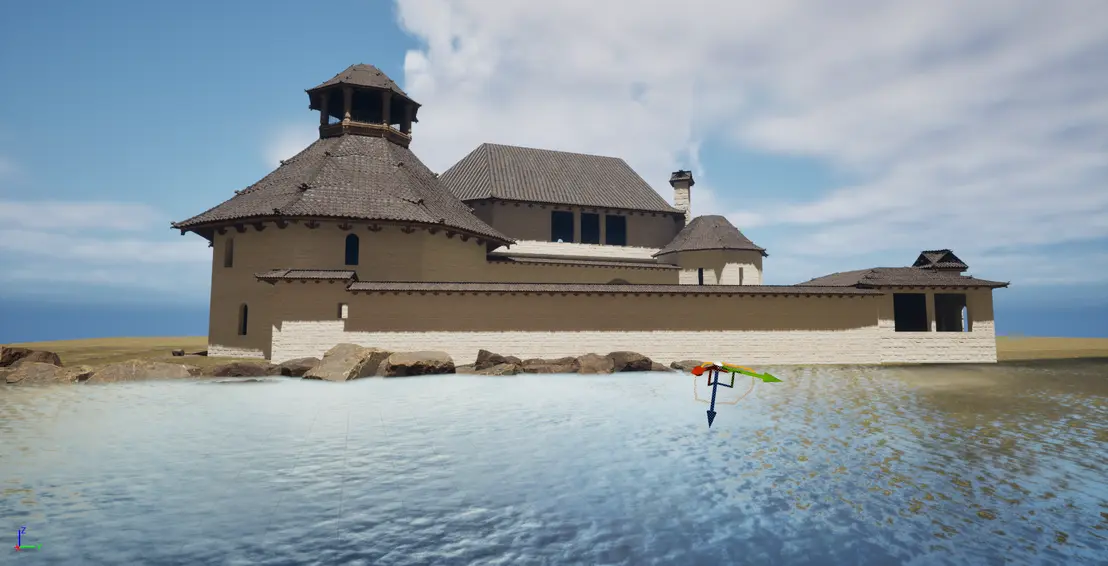
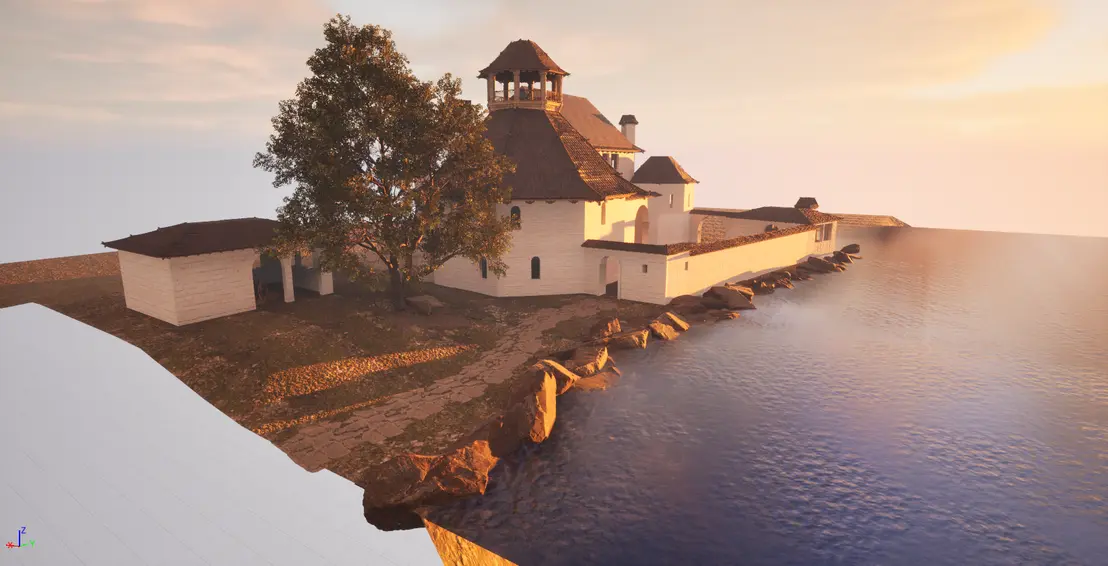
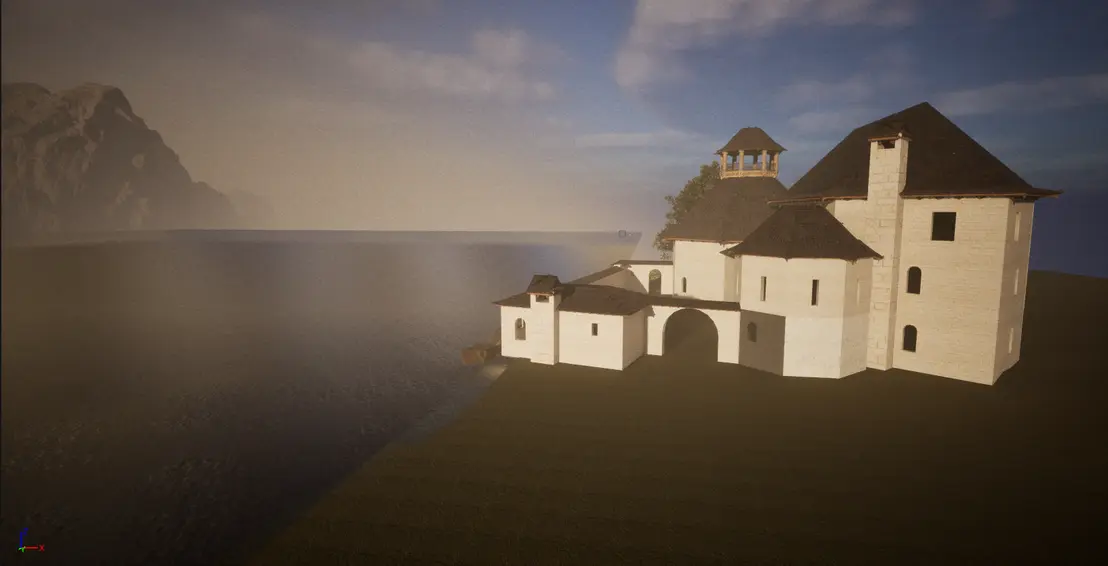
Photorealistic reconstruction of C.G. Jung's Bollingen Tower in UE5.
Concept and References
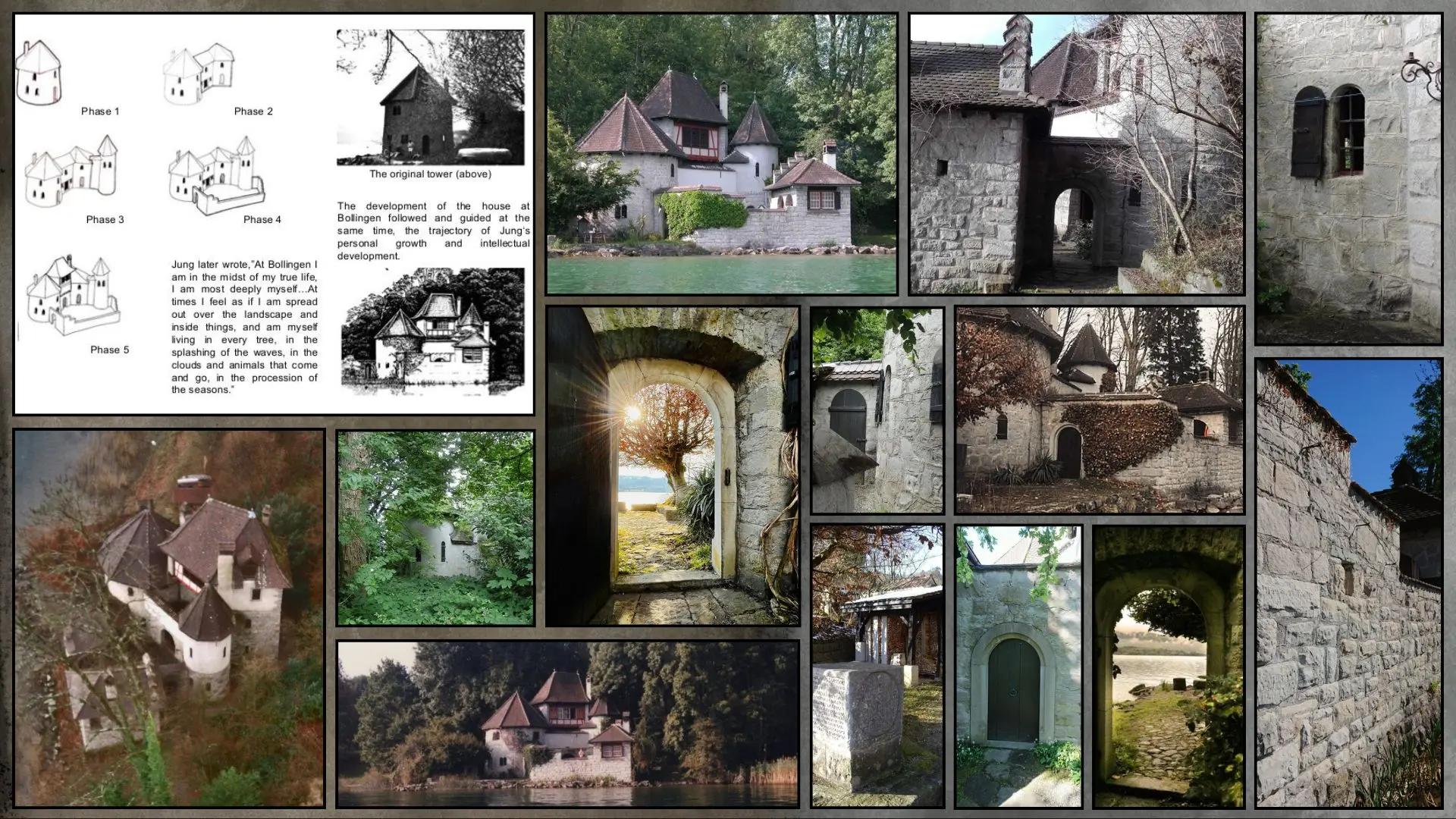
The first phase focused on the in-depth analysis of available historical and architectural references (period photographs and floor plans) to ensure a structural foundation faithful to the original building. While starting from a rigorous reconstruction of the fundamental architecture, I exercised a targeted artistic direction, intervening on specific environmental details and the interiors. This approach allowed for maintaining the stylistic and historical coherence of the structure, but also for adapting and enhancing it to serve the project's emotional vision.
Workflow and Objective:
To materialize the environment, I integrated high-quality assets from Quixel Megascan. Attention focused on the care of every aspect — from PBR material management to volumetric lighting — to deliver an authentic and deeply immersive atmosphere.
The final objective was to design a contemplative and photorealistic space, where the fusion of architecture and nature conveys a sense of calm and hospitality, inviting the user to reflection and admiration.
From Blockout to realization
The project was developed by maximising the capabilities of Unreal Engine 5 for construction and photorealistic lighting.
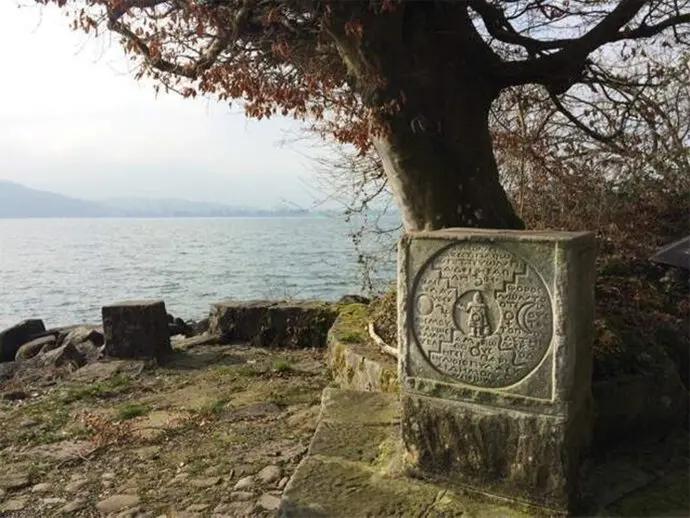
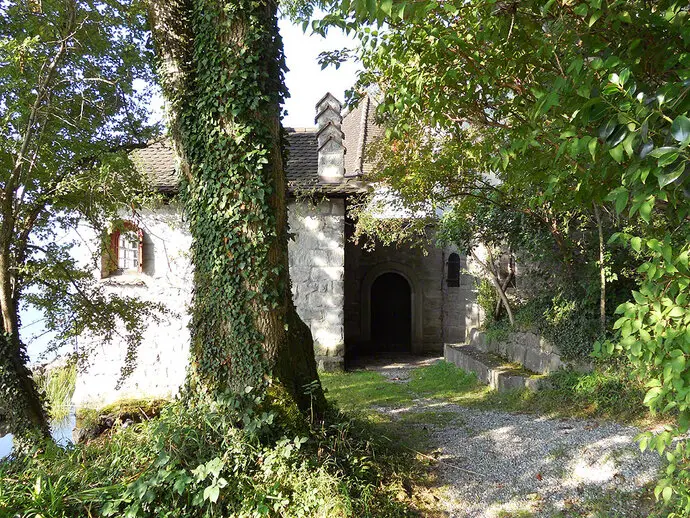
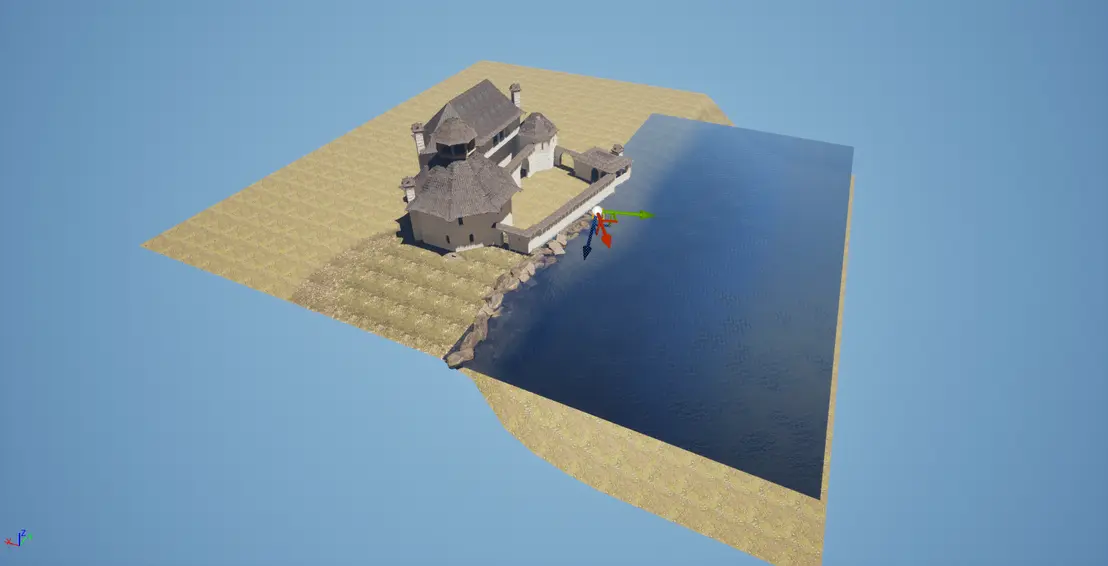
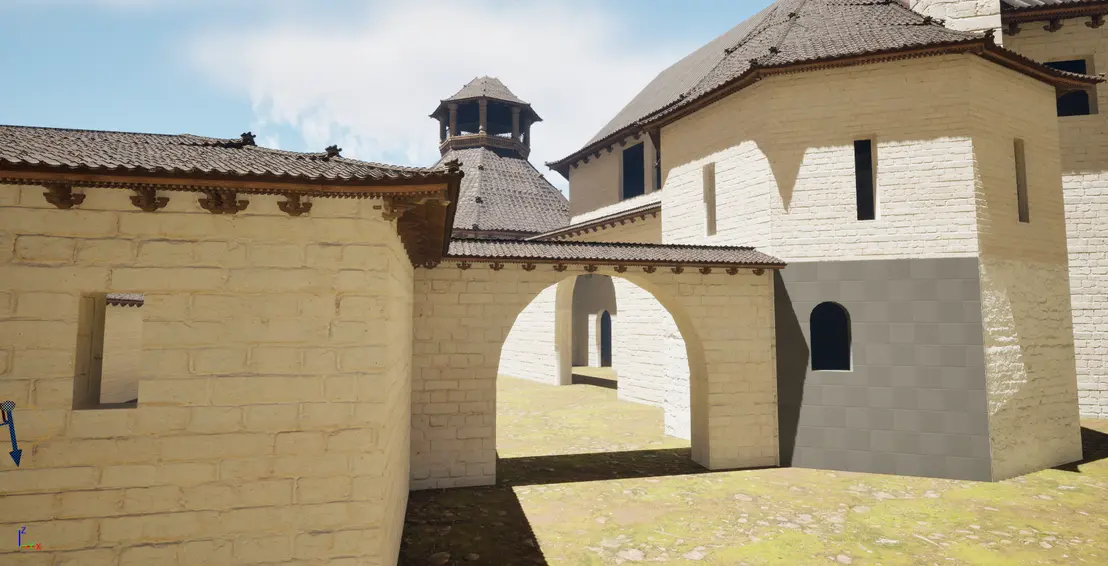
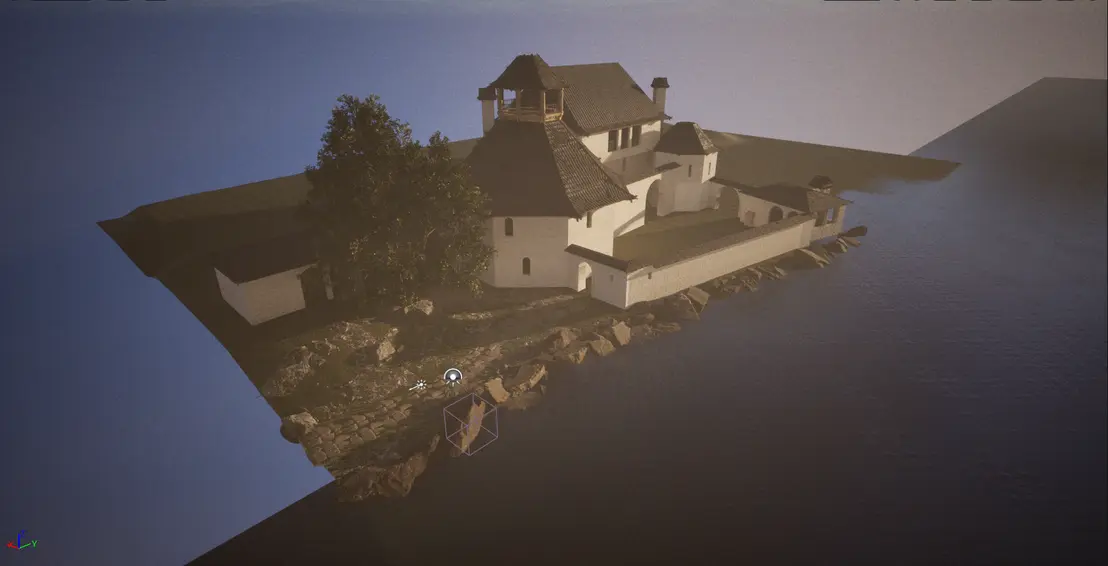
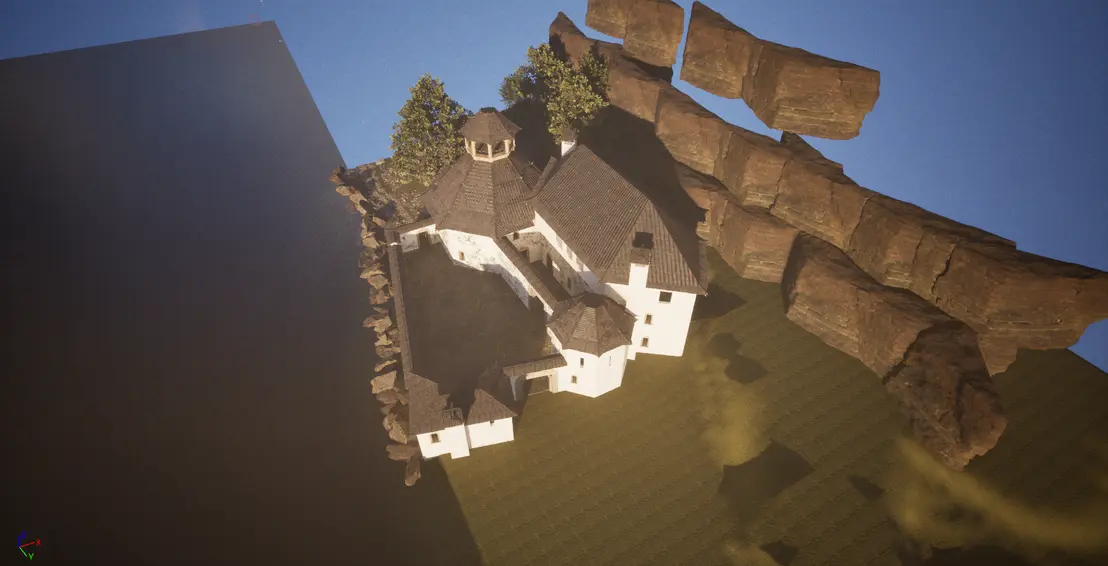
- Architectural Blockout and Reference Study The first phase involved creating a faithful architectural blockout of the Bollingen Tower, using modelling tools to quickly establish proportions and volumes, in strict adherence to the collected floor plans and visual references.
- Defining the World Environment and Atmospherics Attention then shifted to defining the surrounding environment and the general vibe of the level. This included:
- World Building: Modelling and sculpting the terrain (using UE5's Landscape Tools).
- Global Illumination (Atmospherics): Setting the visual tone by calibrating the dynamic lighting system, defining the sun's position (Directional Light), and the atmosphere with the Exponential Height Fog and Volumetric Clouds. This step was crucial for establishing the atmosphere that would later guide the texturing choices.
- Environmental Populating and Asset Integration With the atmosphere defined, I proceeded to the set-dressing and asset integration phase:
- Asset Management (Fab/Quixel): I oversaw the selection and integration of high-resolution PBR Assets from Quixel Megascans/Fab, including ground materials, rocks, vegetation, and furniture.
- Level Optimization: Asset integration was managed with a focus on efficiency, utilising the Nanite system for handling high-density geometry meshes and the use of LOD (Level of Detail).
- Refining Key Areas and Narrative Composition Key sections (the initial driveway, the interiors, and the Menhir Garden) were refined, placing emphasis on Spatial Narrative:
- Composition and Framing: Each area was optimised for visual framing (the use of Funneling in the driveway) to direct the gaze and maximise emotional impact.
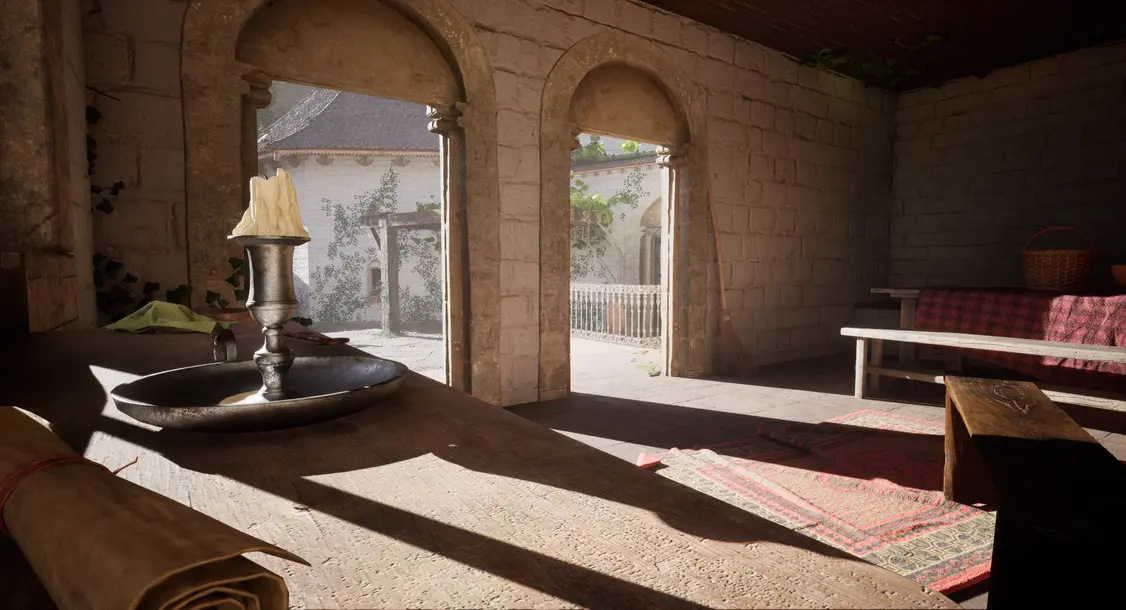
- Interactive Lighting (Lumen): In the interiors, I leveraged the Lumen system and careful calibration of the Point Lights to create a warm and intimate atmosphere, realistically managing light bounce and the volumetric rays filtering through the windows.

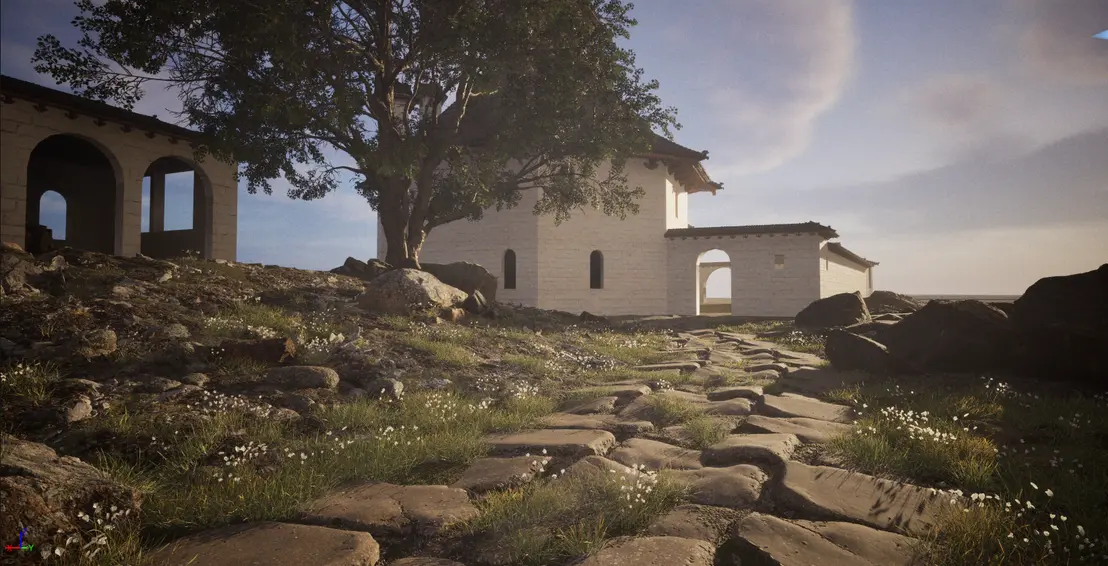
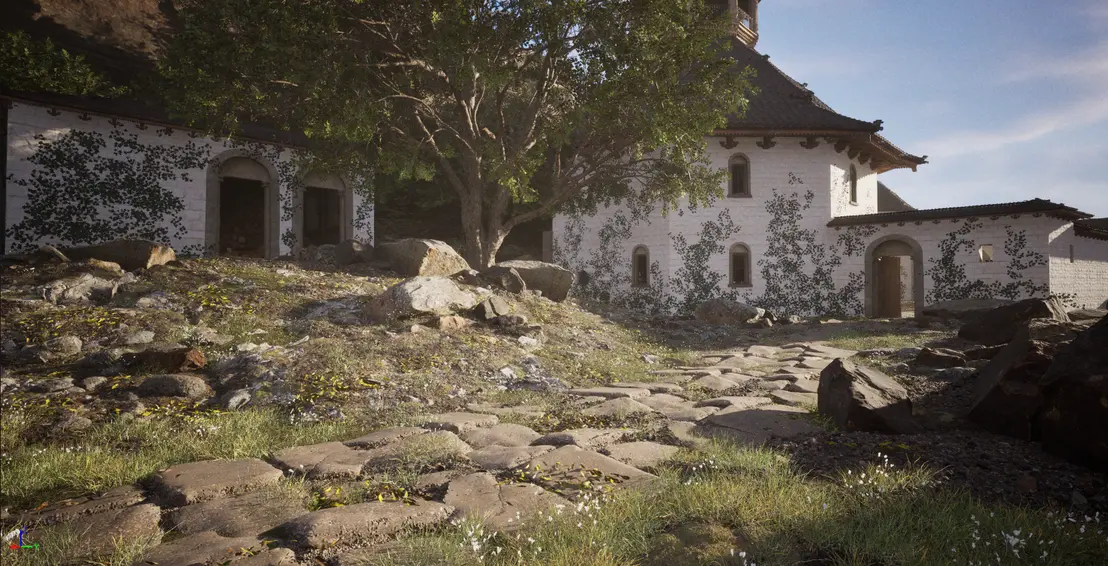
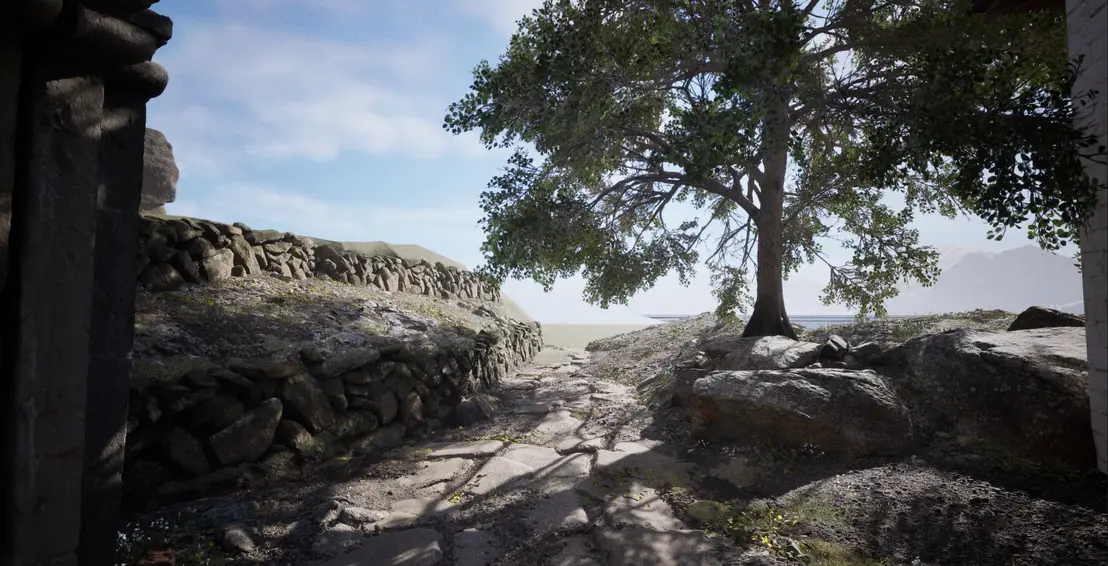
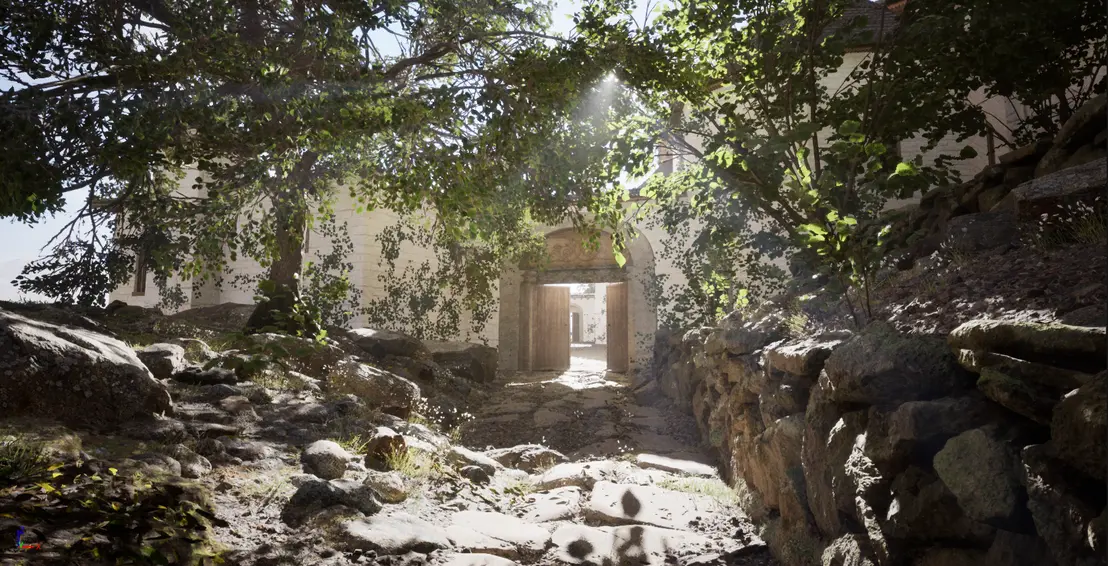
Level Design
The primary objective was to translate the sensations that Jung himself attributed to this place, conceived as a true "spiritual retreat."
The level was designed to guide the user through a predefined narrative path, using funneling and composition techniques to direct the gaze. Emotional contrasts between spaces are leveraged: from the intimate coziness of the interiors, with its warm light and wooden materials, to the scenic and bright openness of the exterior.
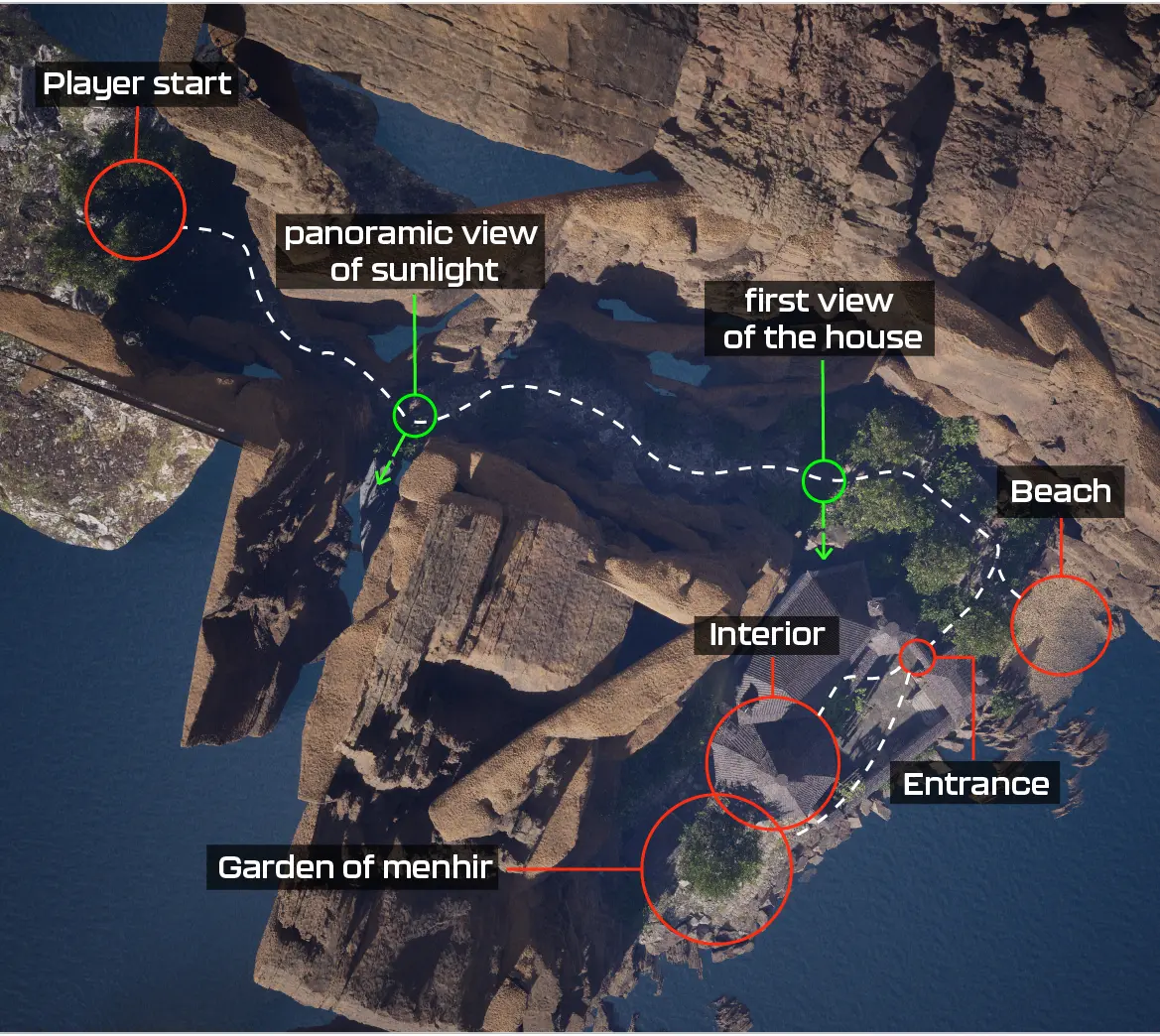
Exterior path:
The objective is to Delineate the player's progression, using salient areas as narrative beats to guide the experience.
It serves as a controlled and progressive introduction to the environment. The Level Design leverages the principles of Funneling and visual composition to direct the user's attention:
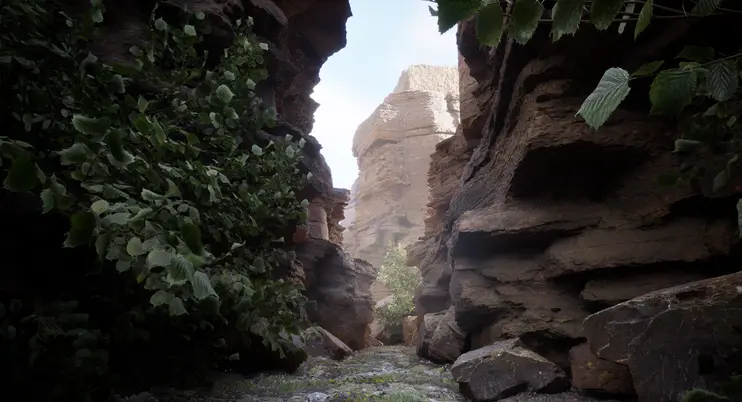
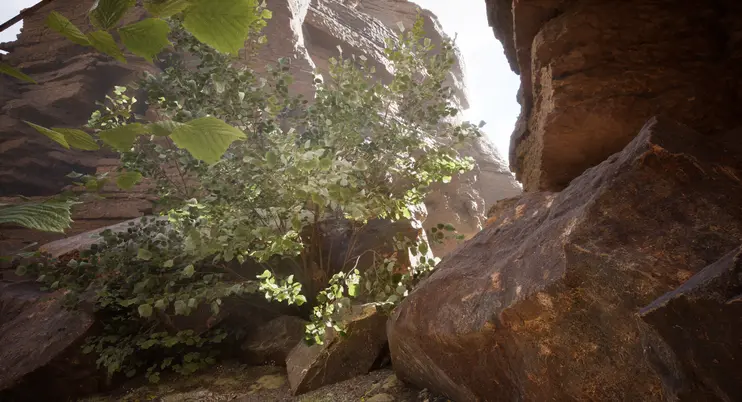
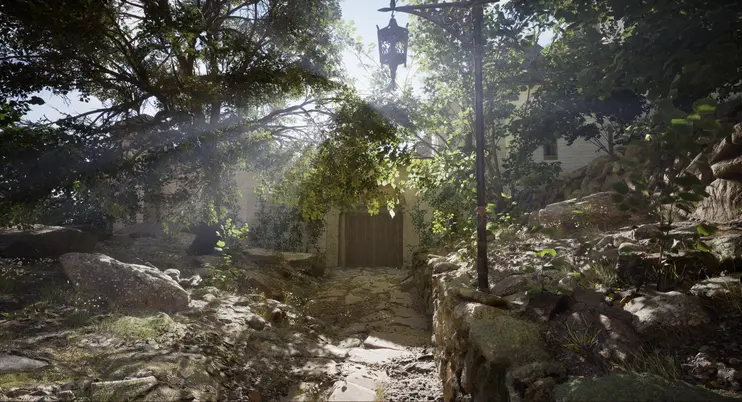
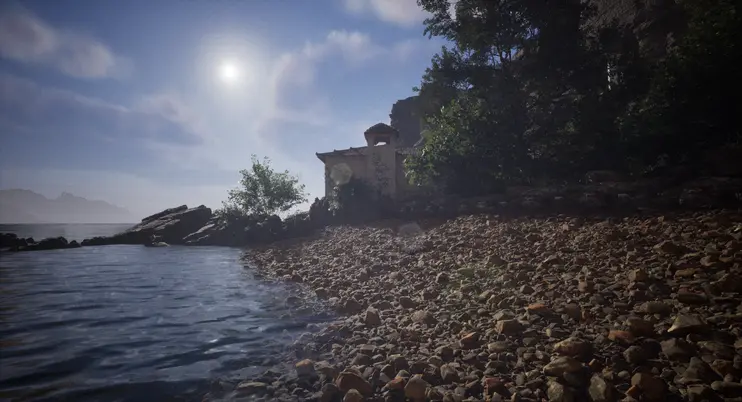
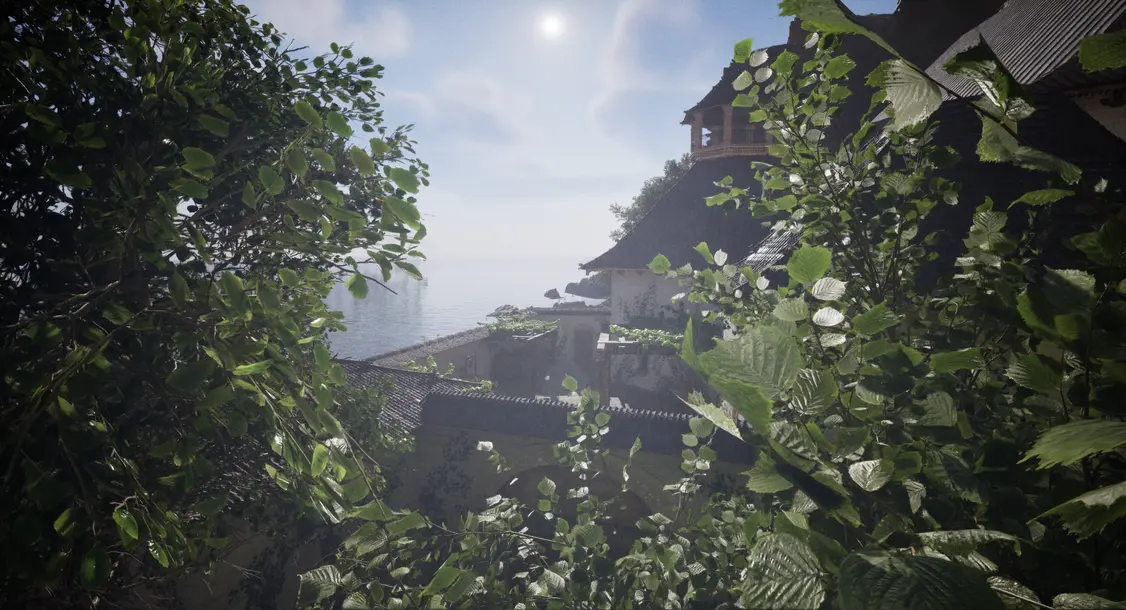
- Player Start: The path opens with a controlled view, using vegetation as a natural frame to direct the gaze.
- Panoramic view of Sunlight: An emotional reveal moment that introduces the feelings of the level, leveraging rays of light to increase the drama.
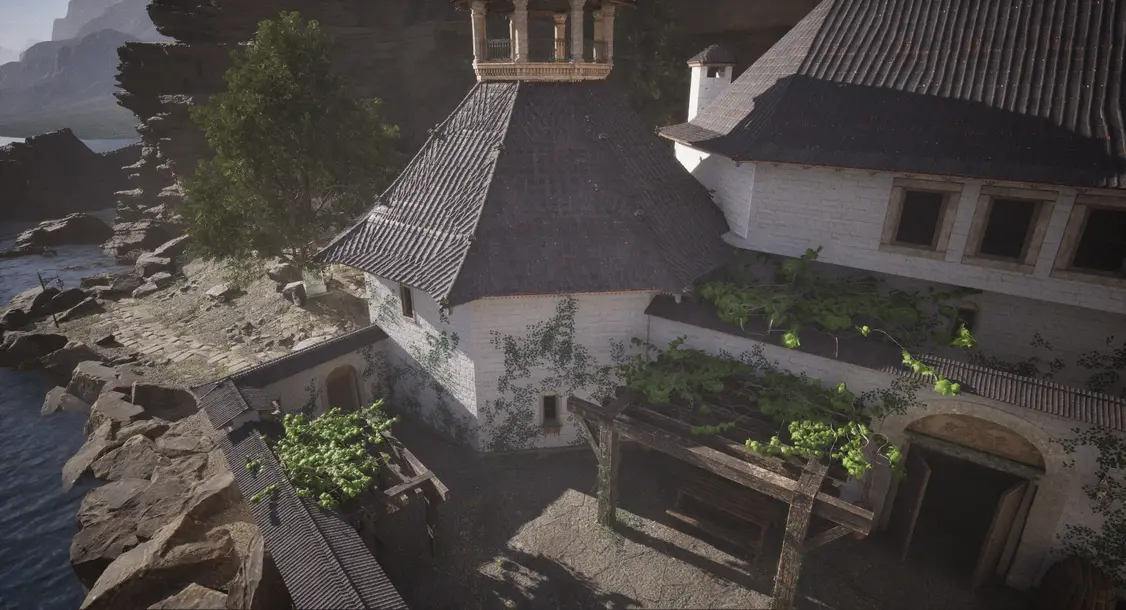
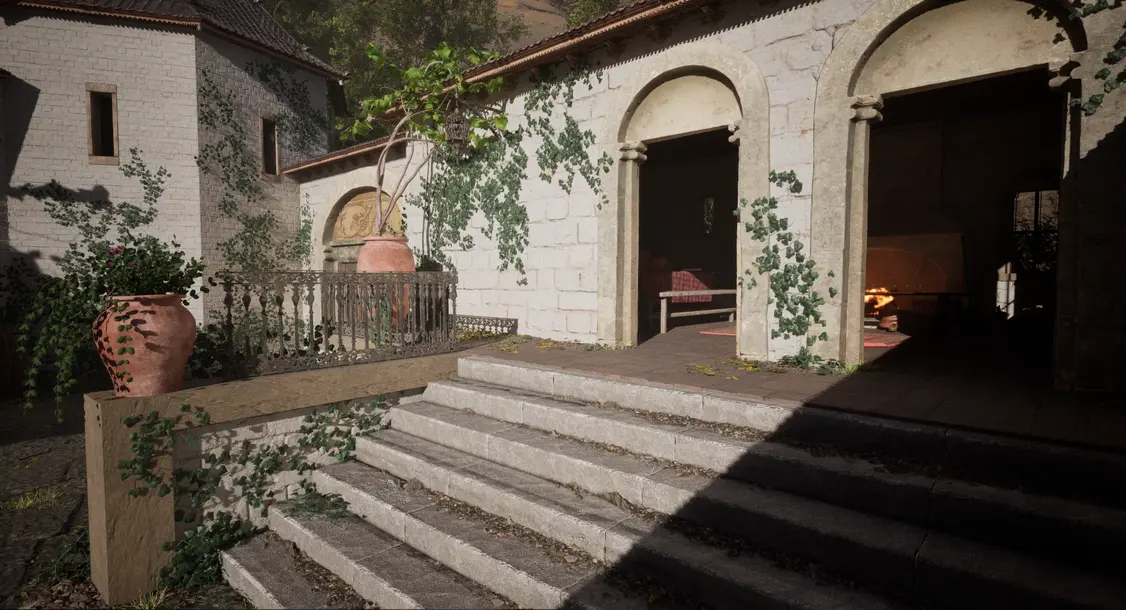
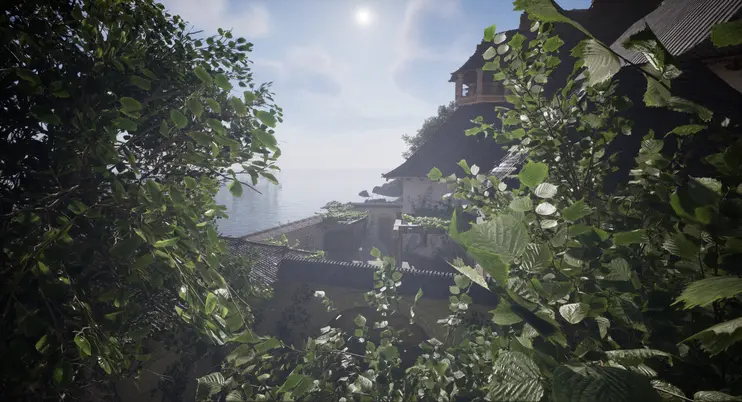
- First View of the House & Entrance: The cobbled path inevitably leads to the entrance. This route was optimized to maximize the visual impact of the House, presenting a clear progression from the wild nature to the constructed refuge.
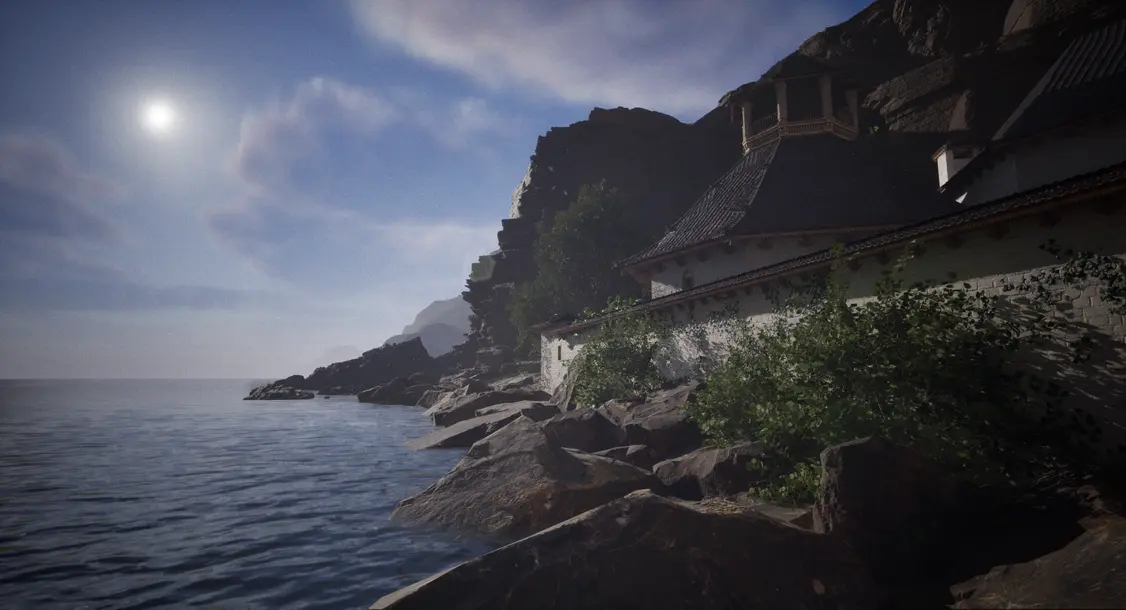
- Beach: The inclusion of the beach serves to highlight the natural element (the lake) and prepare the user for the Menhir Garden section.
The interiors:
The interiors are designed to be the narrative and psychological heart of the level. The environment is predominantly lit by point lights and spot lights, supporting the directional light that is heavily filtered by the windows. This creates a strong contrast with the exterior and conveys a feeling of calm, study, and serene seclusion.
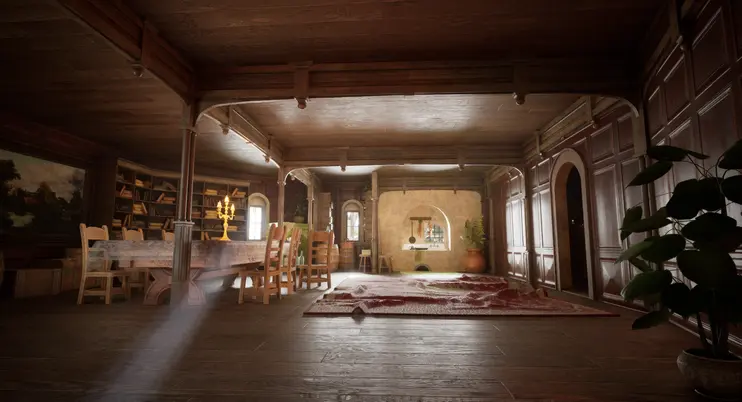
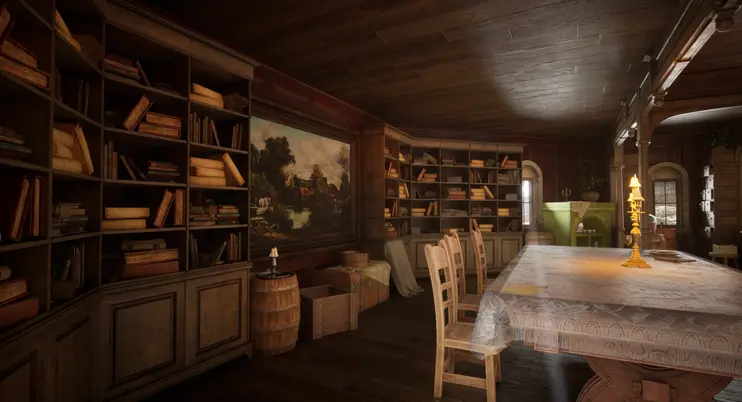
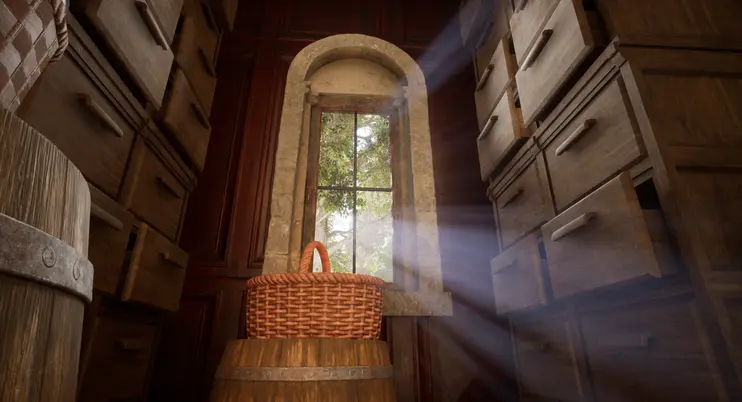
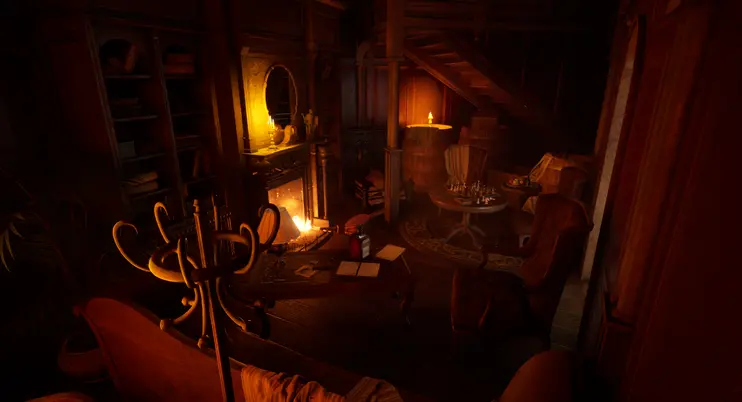
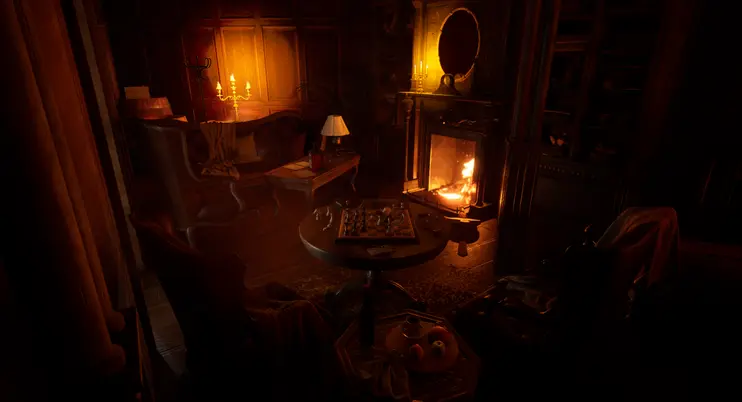
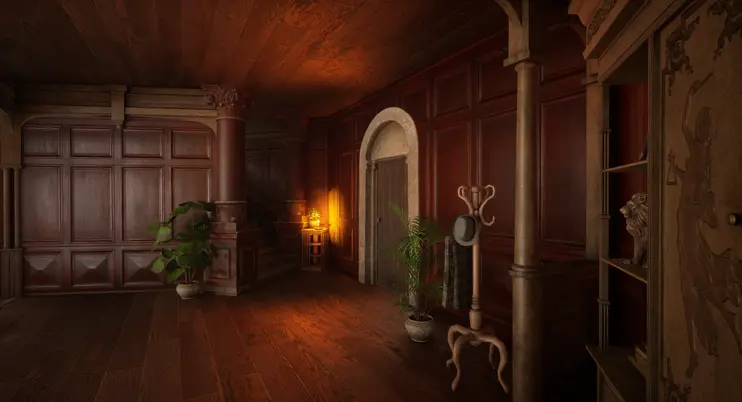
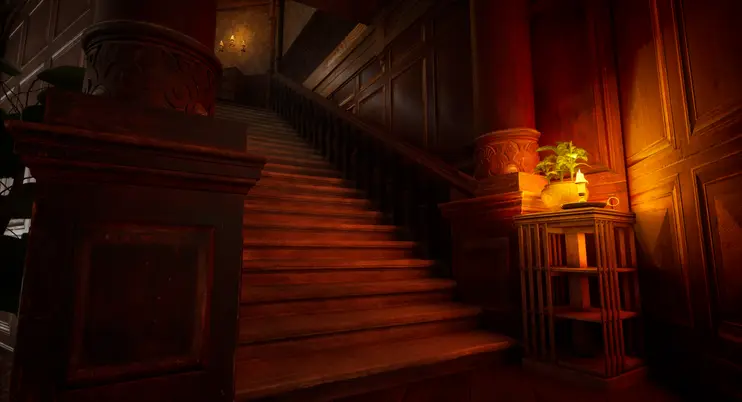
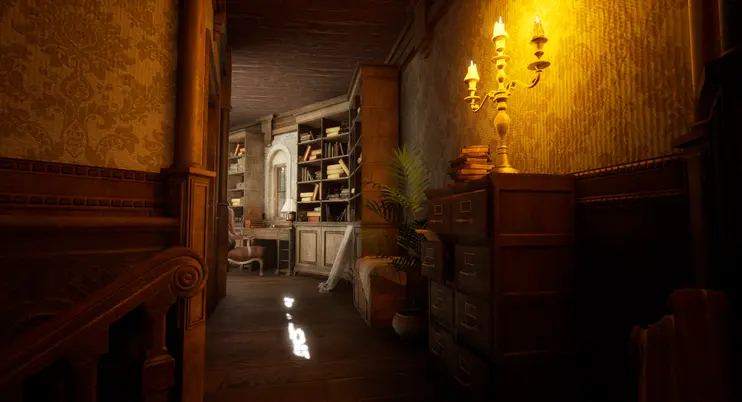
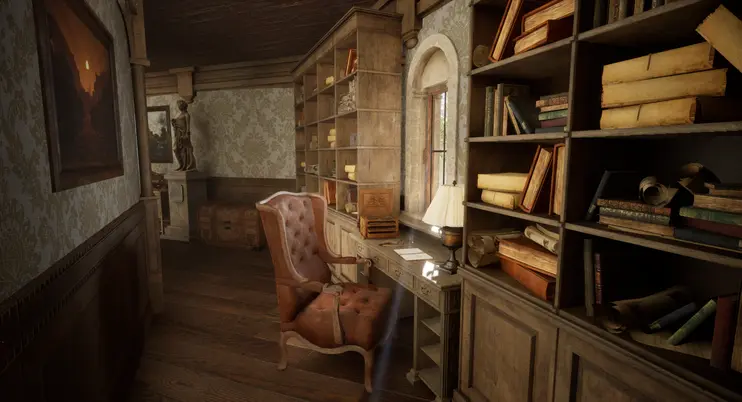
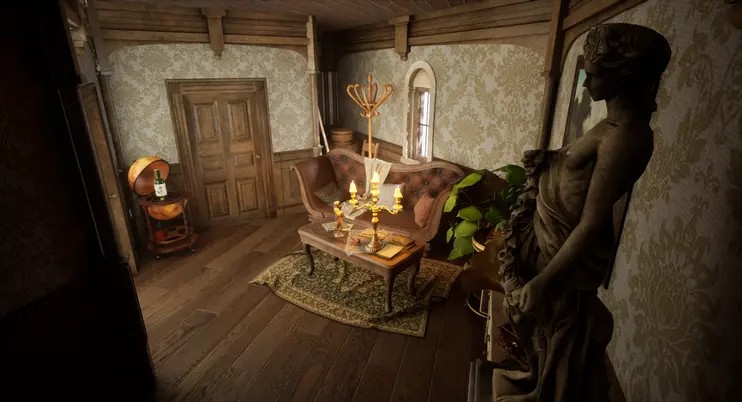
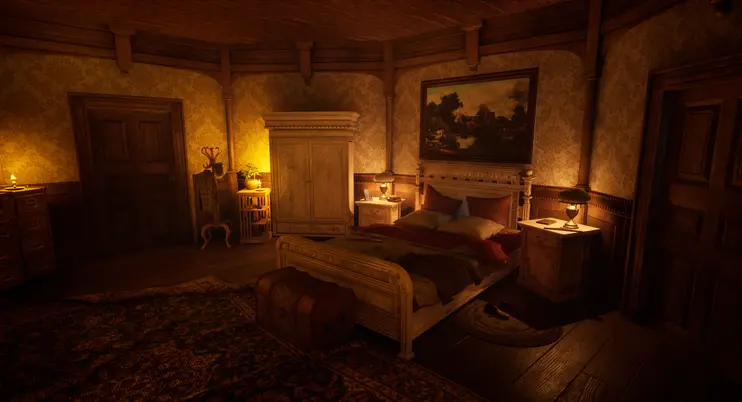
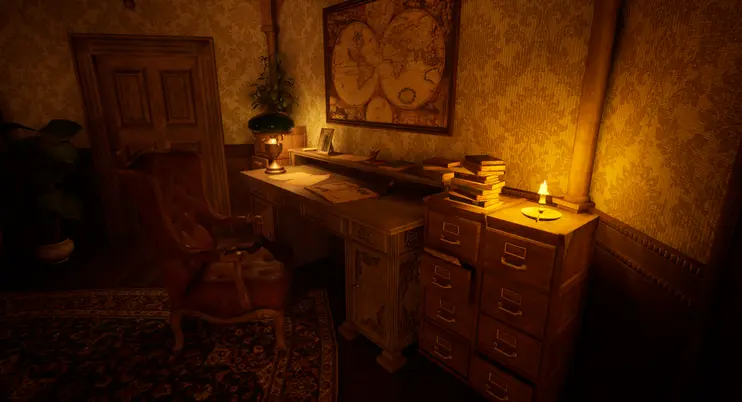
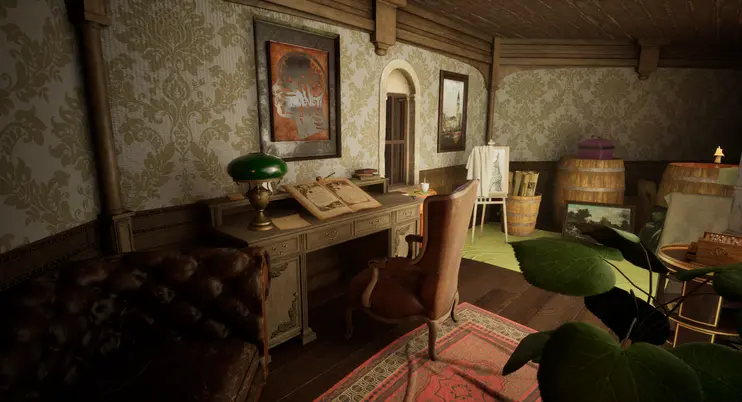
The narrative is conveyed by Asset Management: although high-fidelity libraries (Fab/Quixel) are used, every element (bookshelves, desks, paintings) is carefully positioned to reflect Jung's reflective and culturally dedicated character, contributing to intense environmental storytelling.
The garden of menhir:
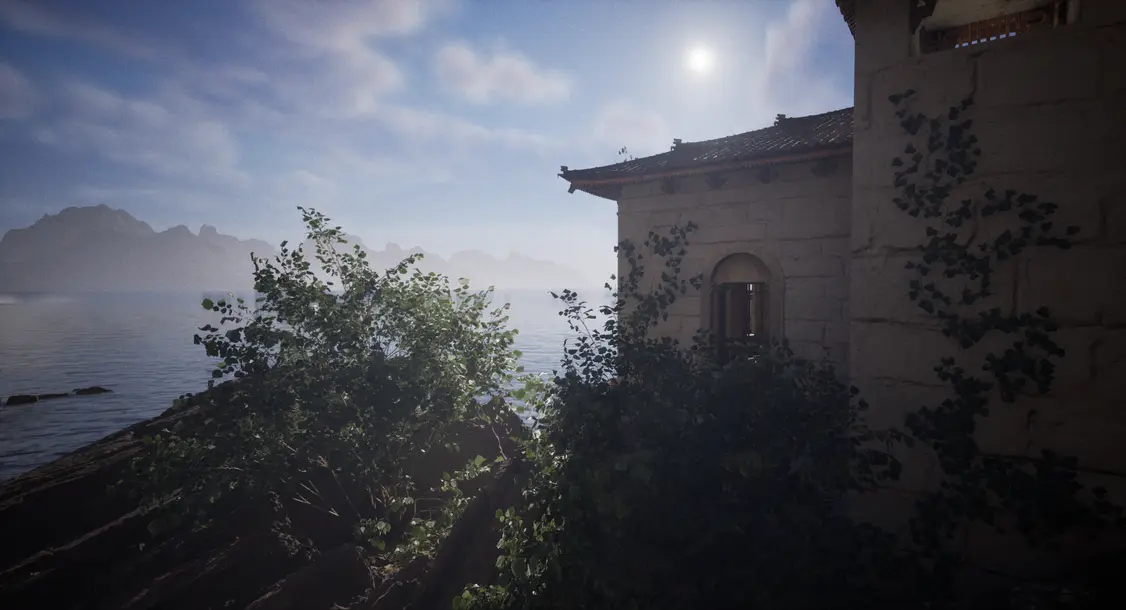
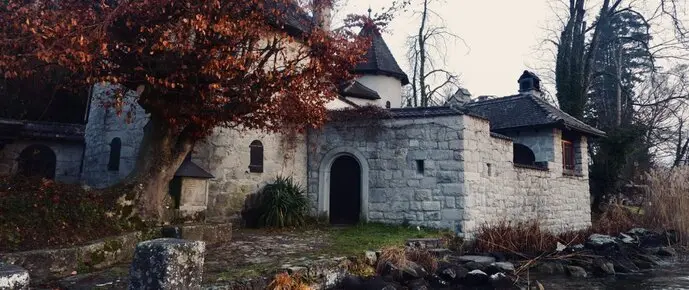
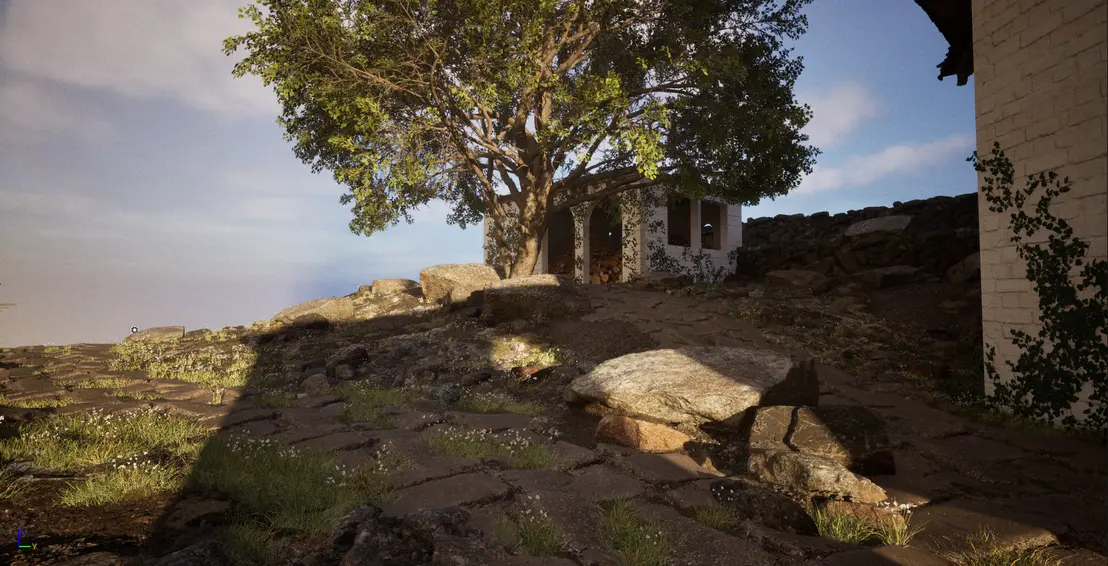
It serves as the emotional climax of the path. This space balances the domestic refuge with the immensity of nature, offering a point of contemplation over the lake. The view is intentionally framed by the branches of the central tree to direct the gaze towards the horizon. The key element, the menhir, is faithfully recreated and positioned as a symbolic focal point at the base of the tree.
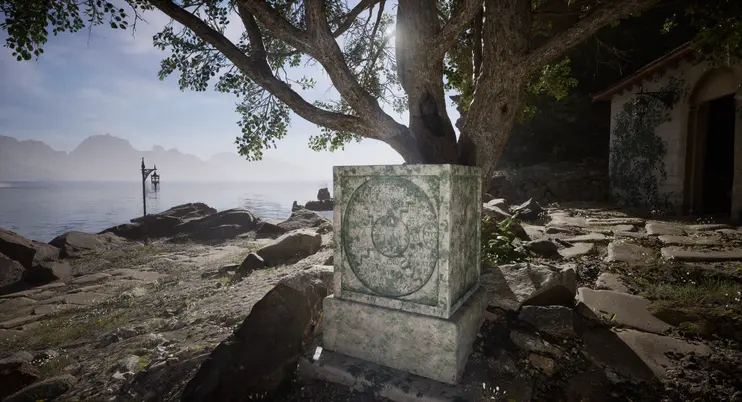
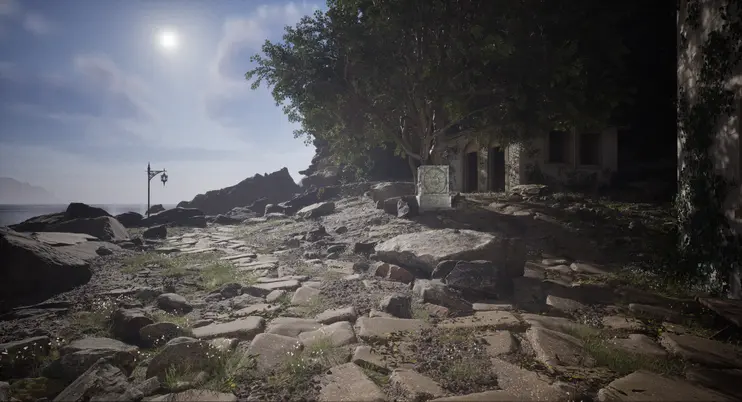
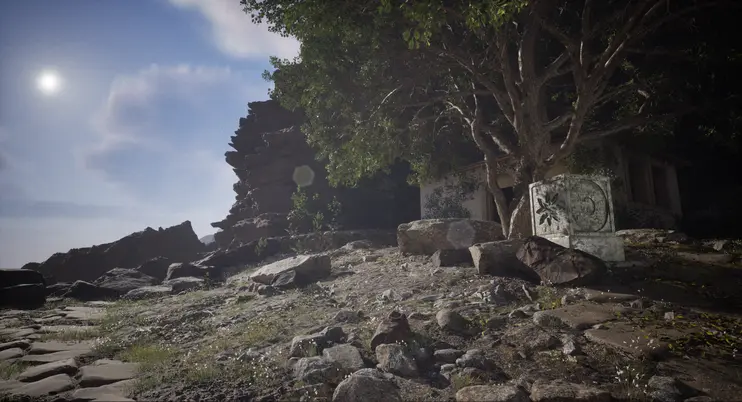
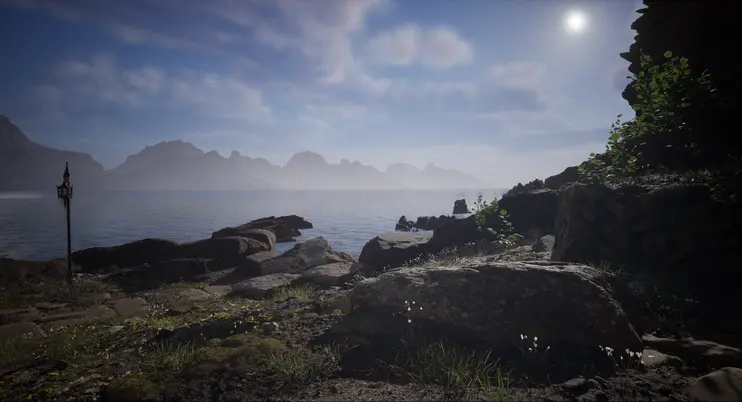
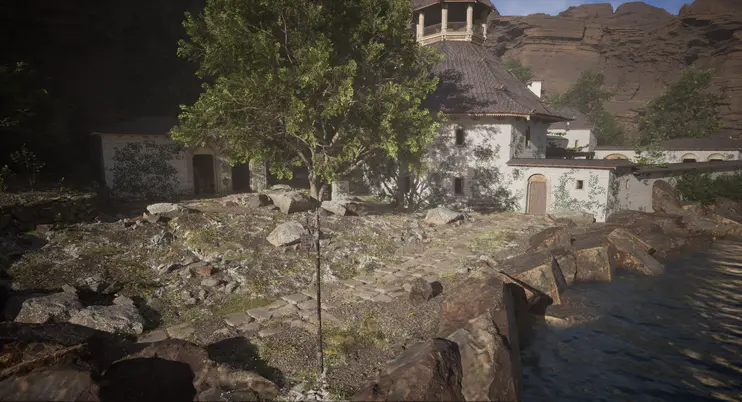
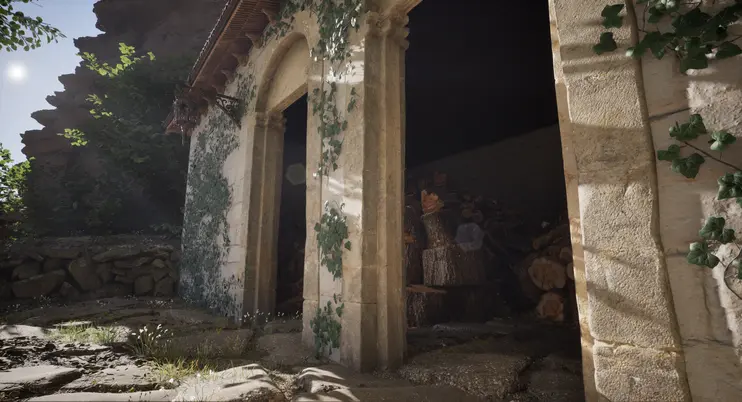
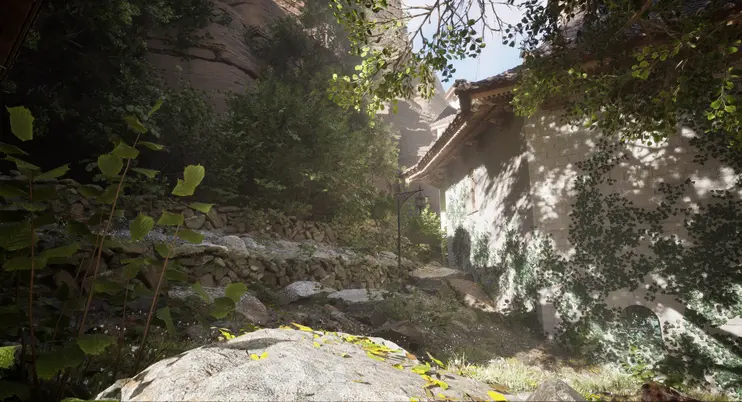
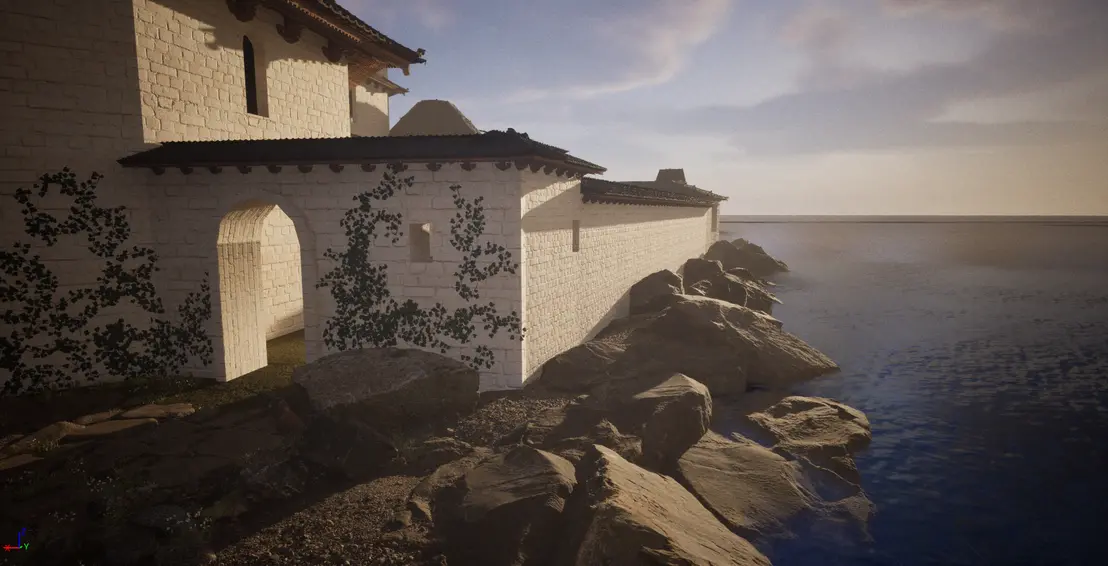
Technically, the area is characterized by external lighting that utilizes dynamic and filtered sun rays to increase the emotional impact. The water simulation and the integration of rocks and vegetation (Megascans) on the shore are managed for a high level of environmental photorealism and physical light interaction.
Environment design
House entrance
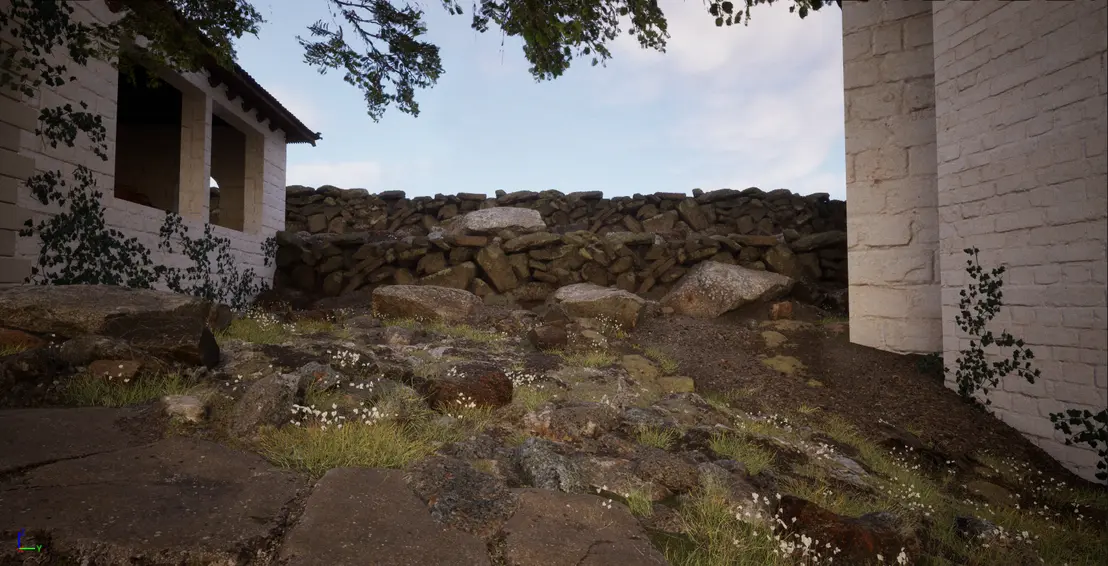
- Composition and Visual Guidance: The arrangement of natural elements – the dense vegetation on the sides, the rocks, and the slightly uneven ground – was designed to create a clear visual cone. This visual "funneling" organically and inevitably leads the player's eye to focus on the main entrance door of the structure in the distance. Light, in particular, is a key element in this composition, filtering through the tree canopies and illuminating the path, reinforcing the direction.
Design and Technical Considerations:
- Atmosphere and Lighting (Technical Setup): The lighting in this section is crucial for establishing the tone of the experience. We aimed for a filtered, diffused, late-afternoon sunlight to create an atmosphere of serenity and inviting mystery.
- Technically: This was achieved through a careful balance between the Directional Light (simulating the sun), Sky Light (for diffused ambient lighting), and the use of Lumen in UE5. The latter allows for realistic light bounce management between the vegetation and the driveway surfaces, contributing to a sense of depth and realism. The Post Process Volume was used to refine the atmosphere and fog, increasing the sensation of a "living," natural environment.
- Environmental Detail (Asset Placement & Material Blending): The richness of environmental detail is achieved through the careful selection and placement of vegetation assets (trees, shrubs, grass) and rocks, with a focus on the natural blending between different ground materials (earth, stones, moss). The use of PBR textures for the cobbled driveway and the vegetation ensures the path appears credible and reactive to the lighting. Variations in the foliage and the presence of small irregularities in the terrain contribute to an organic, non-repetitive look.
- Transition and Promise: The driveway is not just a physical path but also an emotional transition. It is the player's first contact with Jung's retreat, a visual promise of what lies beyond the threshold, inviting exploration and the discovery of the House's interiors and exteriors.
The Interiors: The Contemplative Retreat and Jung's Study
The interior spaces of the Bollingen Tower were designed to be the narrative heart of the experience, evoking Carl Gustav Jung's reflective, scholarly, and culturally dedicated character. The environment aims to convey a sense of calm, serenity, and historical warmth, typical of a true spiritual and intellectual refuge.
The most important technical element in the interiors is the lighting, used to sculpt the spaces and influence the player's mood:
- Asset Variety and Modularity: The richness and variety of the assets were achieved through a meticulous process of Asset Management and integration, using high-fidelity model and material libraries (Fab/Quixel Megascans). This approach allowed for a focus on placement, narrative detail, and PBR texture management to ensure coherence and photorealism throughout the environment.
- Warm and Low Lighting: The primary lighting is deliberately warm and low, achieved through the predominant use of local artificial light sources (Point Lights and Spot Lights with warm colour temperatures, such as candles and table lamps). This simulates the typical lighting of a past era and creates a sense of intimacy and calm.
- Volumetric Light Rays: The effective use of Volumetric Fog in combination with sunlight filtered through the narrow windows creates dramatic light rays (God Rays). This technique, besides adding depth and atmospheric realism, also serves to direct attention towards key details useful for encouraging immersion.
- Global Illumination (Lumen): The Lumen system is essential for the realism of the interiors. It allows sunlight and artificial light to bounce realistically off surfaces, ensuring that shaded areas are not completely black, but maintain a diffused and soft ambient illumination, consistent with the cozy atmosphere.
The garden of menhir
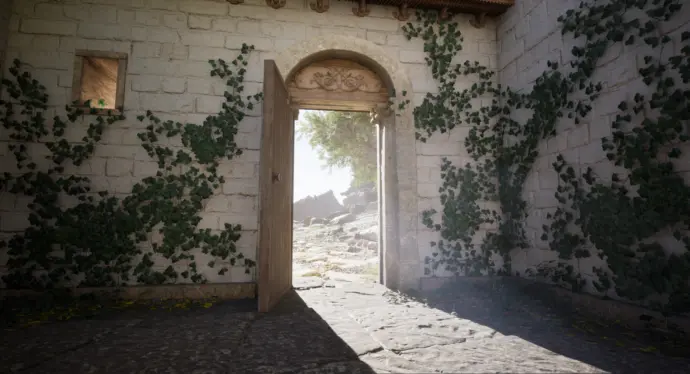
- Emotional Focal Point: The entire scene is constructed to highlight the view of the lake. The opening of the door marks a dramatic transition: the shadow of the inner courtyard gives way to the bright horizon.
- Natural Framing: The view of the lake is intentionally framed by the branches of the central tree and the rocks on the ground, creating a composition that balances the wild nature with a sense of control and intimacy. This framing technique intensifies the feeling of discovery and serene isolation.
- The Menhir (Physical Symbol): The key element, the menhir, is a narrative centre that merges the physical environment with the spiritual meaning intended by Jung, faithfully recreated to serve as a point of reference and contemplation.
Lighting & Atmosphere:
- The lighting is designed to be rich in narrative power. In particular, the use of direct sun rays filtering through the leaves creates a dramatic effect that points towards the player.
- Technically: This is managed by balancing the Directional Light with the Volumetric Fog to diffuse the light atmospherically. The use of the Lumen system ensures that shadows are soft and realistic, while areas in full light maintain saturation and depth.
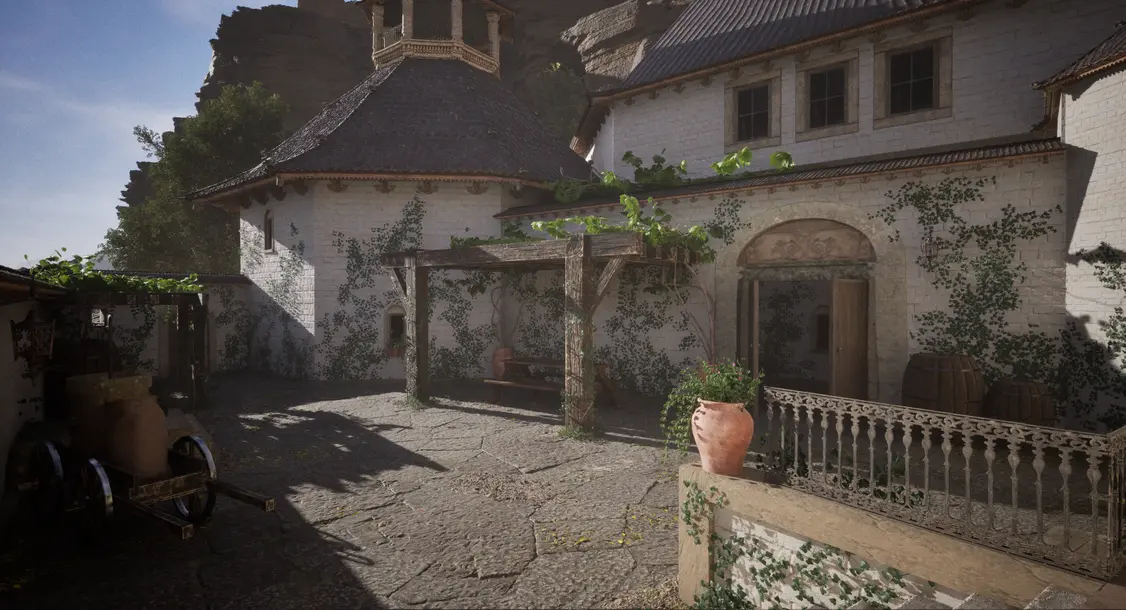
- Architectural Detail: The warm light hitting the white walls enhances the masonry textures and the integration of climbing vegetation, emphasizing the building's age and isolated character.
Functionality and Flow:
- Exterior Refuge: The area acts as a narrative break, allowing the player to absorb the atmosphere and reflect on the themes introduced inside the house, balancing internal observation with external contemplation.
- Guided Exploration: Although it is a more open space, the presence of the coastline and the arrangement of the menhir and the tree limit and direct exploration, maintaining the focus on the lake view and the symbolic element.