


Open world Project
Overview
This project stems from the idea of creating an open-world map that harmoniously combines fantasy and medieval elements, giving life to an evocative and richly detailed environment. The goal is to offer an immersive exploration experience, where the player can move freely within a vast and credible world, amidst evocative landscapes, historical architecture, and lush nature.
I will illustrate the level design process, analysing the stylistic and structural choices that guided the construction of this scenario.
(Click or swipe to view)
Level design
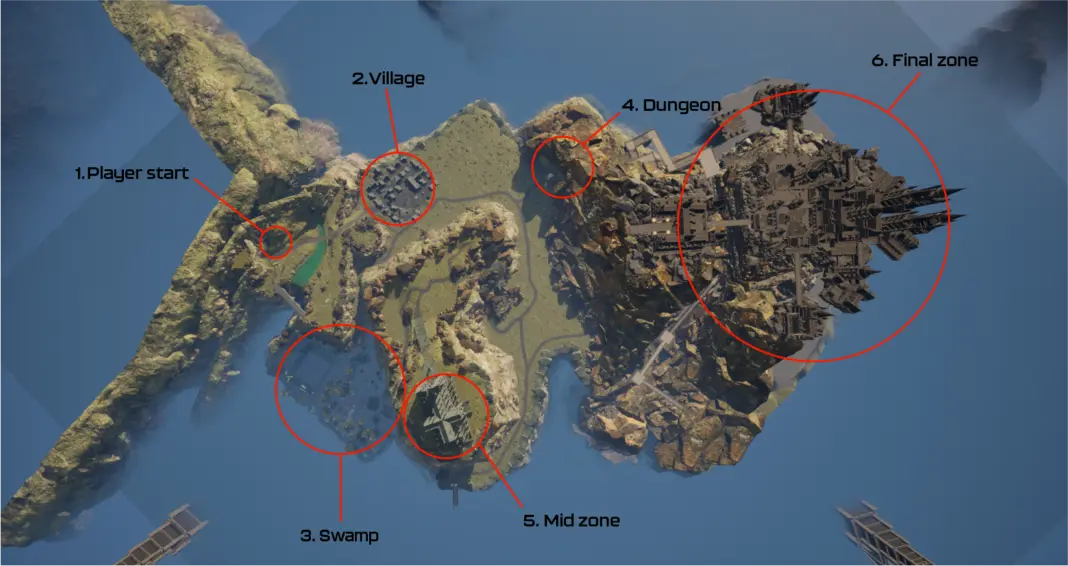
The map spans a vast territory, enriched with ancient ruins, fog-shrouded forests, a village that serves as a safe zone, and secret dungeons to discover. Each area is designed to offer a fluid and engaging gameplay experience, with a level design intended to guide the player without compromising their freedom of exploration.
(Click to view)
Player Start
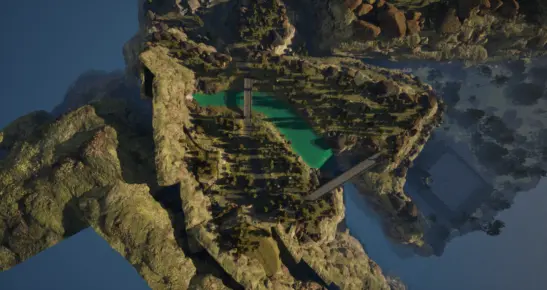
The player begins their adventure in an area that branches into two roads, both of which will ultimately lead to the village, but at the same time offer the possibility of exploring different corners of the surrounding world.
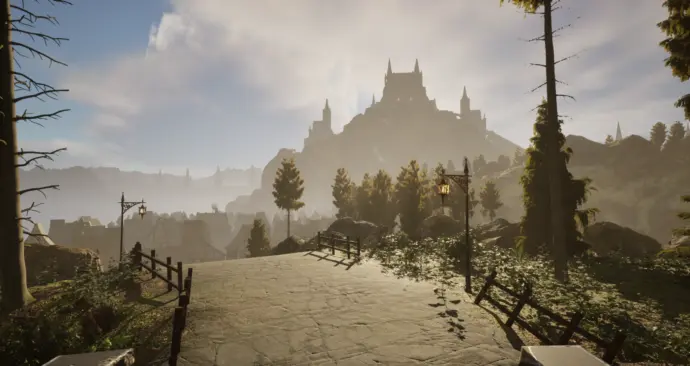
The area where the player starts is located at a higher point than the average of the map, allowing for a panoramic view of the subsequent areas and offering a clear idea of the vastness and variety of the world they will face.
(Click to view)
This initial area is designed to encourage exploration, giving the player a sense of freedom and immersion, while at the same time allowing them to get an idea of the threats and locations they will encounter during their journey.
The highest and most imposing areas are designed to evoke fear and a sense of challenge.
Conversely, the lower areas give the impression of being more accessible and easily explorable.
(Click to view)
Village
The village is the safe zone.
Here the player can rest, purchase equipment, and receive quests from the residents.
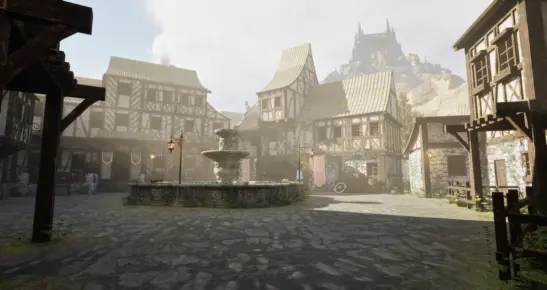
The village has a typically medieval architecture, with wooden and stone houses, a central square with a market, and an inn that serves as a narrative hub.
(Click to view)
The layout of the streets and buildings is designed to encourage intuitive navigation, with wide paths that easily lead to points of interest, but also with narrow alleys and hidden corners that encourage exploration.
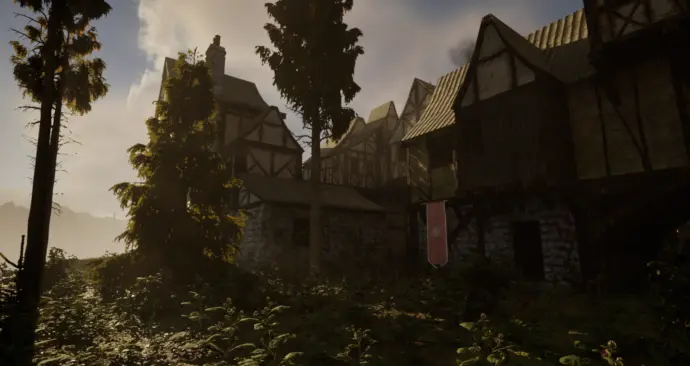
Furthermore, the village's level design integrates with the external world, ensuring that the transition between the safe zone and the more dangerous areas occurs fluidly, creating a contrast that amplifies the tension and immersion in the game.
(Click to view)
Swamp
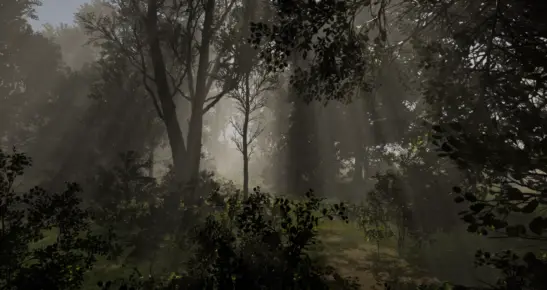
The Swamp was conceived to be an area that challenges navigation and creates an atmosphere of uncertainty and danger.
The muddy, uneven paths are designed to hinder the player's movement.
The dense fog that shrouds the area reduces visibility and heightens the sense of being lost, making every corner seem potentially dangerous.
(Click to view)
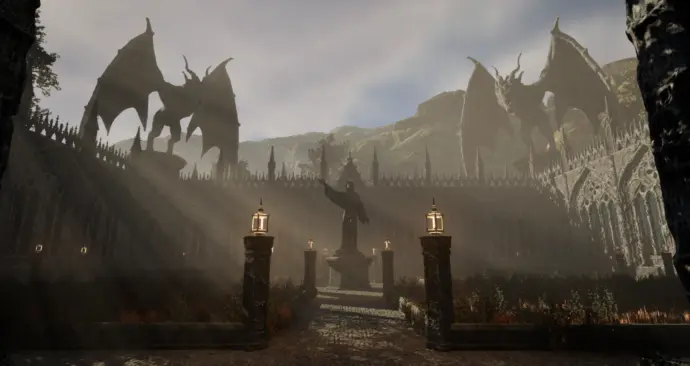
At the end of the Swamp, the player will find themselves facing an imposing and unsettling structure, characterized by Gothic arches that seem to emerge directly from the fog and mud.
The archway is designed to be the reward after an arduous crossing, offering the player a sense of progression and momentary relief.
The contrast between the two areas generates a visual transition that communicates to the player that they are about to enter an area of greater narrative importance or mystery.
(Click to view)
Dungeon
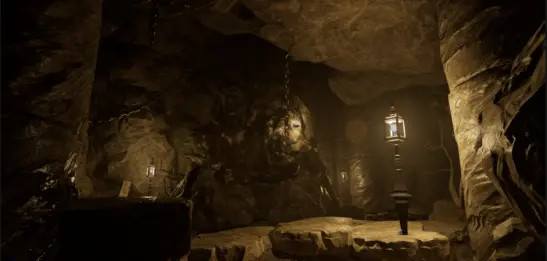
The dungeon is composed of narrow, winding passages that create a sense of claustrophobia, increasing the tension as the player makes their way through the shadows and ruins.
These cramped passages lead to large columned halls, majestic spaces that offer a feeling of grandeur and mystery,
(Click to view)
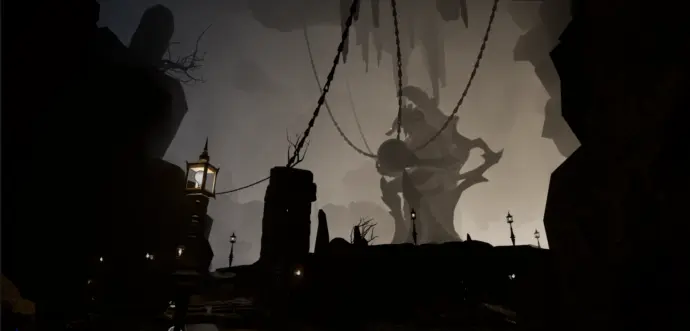
The main hall of the dungeon, an immense cave, is designed to evoke a sense of wonder and unease. The level design of this cave is intended to visually impress the player.
In the centre of the cave, the large statue stands as an imposing presence. Its central position is crucial as it inevitably draws the player's attention and acts as a visual landmark.
(Click to view)
Mid Zone
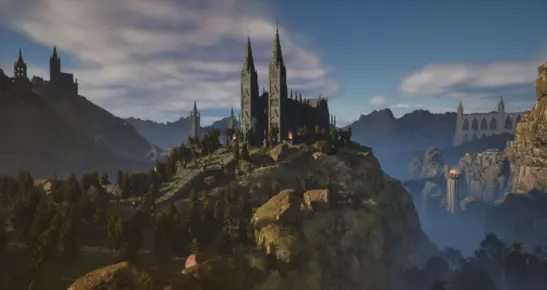
This area acts as a transition point between exploration and a significant encounter, with a design that emphasizes verticality, increasing difficulty, and a strong visual impact.
The uphill path increases the tension and builds a sense of progression.
(Click to view)
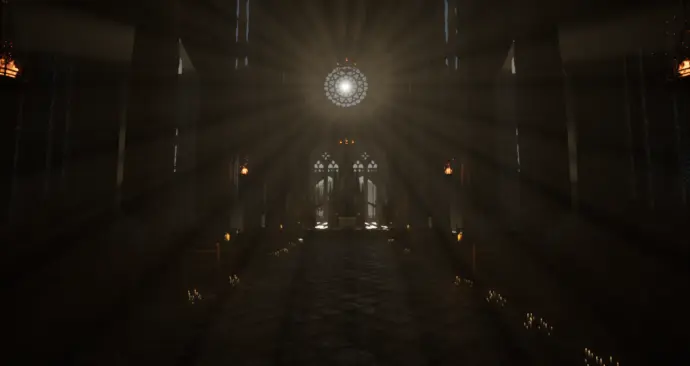
Once past the threshold, the player enters an immense nave, where lighting plays a fundamental role in the level design.
Beams of light penetrate through the stained-glass windows, creating an evocative yet unsettling atmosphere.
(Click to view)
Final Zone
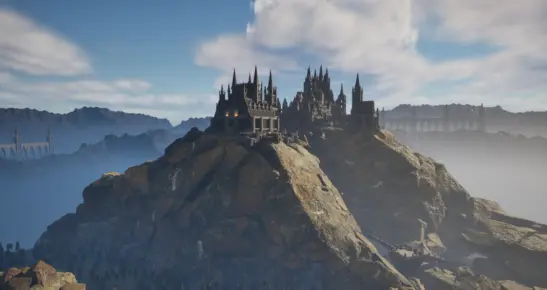
This area is designed to be the apex of the challenge, an area that combines verticality, intricate paths, and a strong sense of oppression to create a memorable experience.
Located at the highest point of the map, the fortress dominates the horizon with its imposing towers and black walls, immediately giving the player the feeling of entering a prohibited and hostile place.
(Click to view)
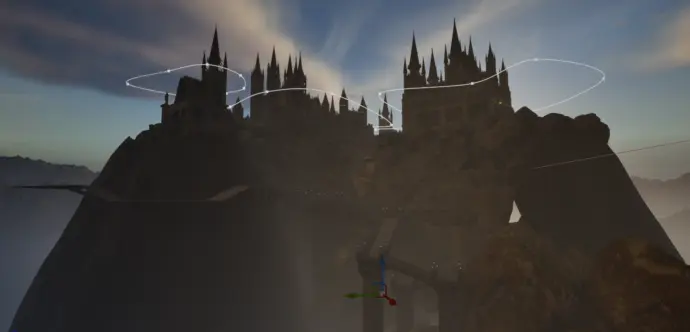
The path leading to the fortress is a bridge that winds through the void.
Some wider areas present alternative routes, offering the player a choice between a safer but slower option, or a more direct one exposed to threats.
(Click to view)